
Success in digital marketing of rapidly changing world comes down to understanding people by a business rather than statistics or data points. The digital customer journey mapping allows companies to look at their whole process from the customer’s perspective and reach them on a deeper level. When marketers have a clear picture of the transition of people from awareness to purchase and loyalty, they can create the experiences that will make his or her casual browser a long-term supporter.

When marketers have a clear picture of the transition of people from awareness to purchase and loyalty, they can create the experiences that will make his or her casual browser a long-term supporter.
The digital customer journey is a depiction of the person’s total relationship with a brand that he develops online. At each step, be it scrolling through social media, opening an email, or reading an online review, a person is building his or her journey.
By mapping these moments, companies can understand where customers get excited, where they hesitate and where the changes they make will make the experience to flow better for them Journey mapping is not only about marketing strategy, it is also about trust and emotional bond.
The Stages of a Digital Customer Journey
An accurately defined digital customer journey model has several stages that can be predicted. Each stage is a different mind-set, hence understanding it enables marketers to communicate with their audience in a natural way.
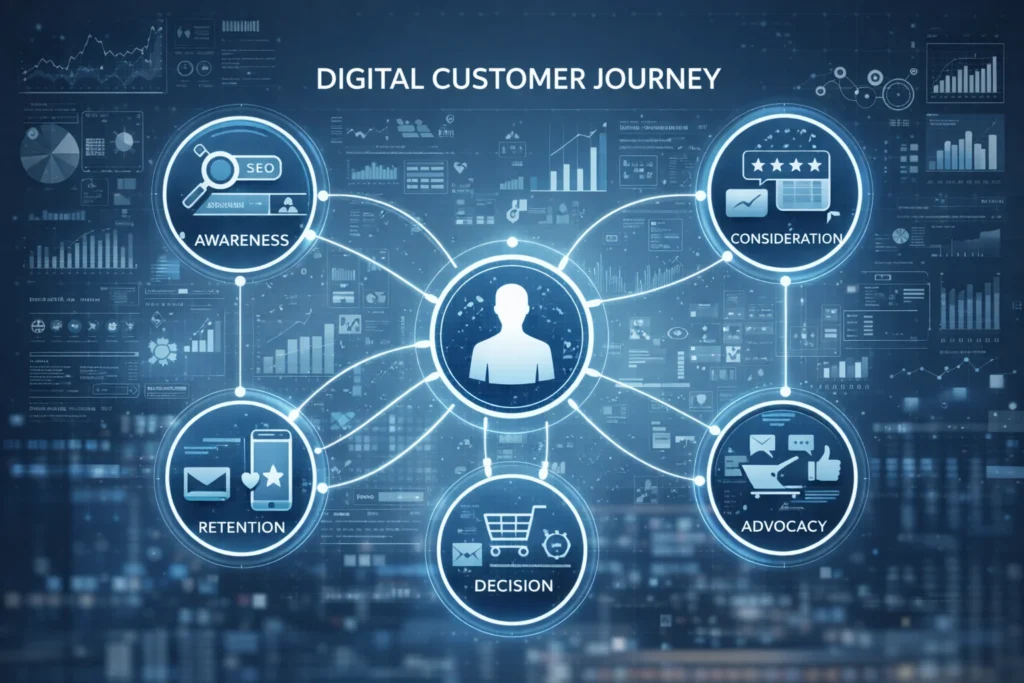
The first stage is awareness
This is when a brand is very first time met by people. It could be via search engine results, social media posts, blogs, or ads. Here, getting noticed is the only thing that counts. Brands put a lot of effort into producing content that is useful, informative, educational, and captivating.
The next stage is consideration
Here, the customers to be decide to compare different brands and figure out which one fits them the best. They check the product information, watch a video that explains the product, or look at the opinion of the user to be sure that the product is exactly what they are looking for.
Businesses can become the customer’s choice and win them during this phase by presenting true cases, success stories, and customer reviews.
The decision stage is when people make up their minds to do something. As an example, customers could opt to add a product to their shopping cart, finish a form, or book a meeting slot.
Direct call-to-action buttons, open pricing, and payment options that are safe all play a role in the elimination of hesitation.
The majority of companies stop at conversion, however, the sustaining relationships post purchase is extremely important. This stage is mainly about the care given to the customer after the purchase, thank you emails, loyalty programs, and tailored recommendations.
The last stage is advocacy when satisfied customers become active promoters.
This is most likely to happen when customers’ experiences were positive and thus, they spread the word through talking or leaving reviews, sharing on social media, and recommending people.
Encouraging user content, showcasing customer stories and offering referral rewards are the ways that make this growth faster and more solid.
How to Map the Digital Customer Journey
To map the digital customer journey you need to watch carefully, analyse data, and have empathy. It starts with knowing exactly who your target are and getting into their way of living.
The initial step is to create the buyer persona– A buyer persona is a deeply detailed description of the most suitable customer for you, derived through real data and sensible deductions. The information is demographic and includes details such as age, place of living, interests, and income level, along with motivations.
Step two is recognizing digital touchpoints -Analysing the digital customer journey through the usage of digital touchpoints is what goes next after that. Customers may be surfing the net for your brand through your site, email campaigns, paid ads, chatbots, or social media channels.
The third step is collecting data and feedback– Using analytics tools such as Google Analytics, Meta Insights, or email performance reports can help one understand what actions users are doing on distinct platforms. Statistics show only one side of the story, at the same time feedback, reviews and surveys show the emotional side of it.
The fourth step is about pinpointing customer pain points and prospects areas to identify where your customers lose interest, become confused or stop their journey. An overly complicated checkout process, unclear product descriptions, and slow response times are the ways in which users get discouraged.
The fifth step is to come up with a graphic digital customer journey mapping. Using visualization tools like Miro or Lucid chart can make it less difficult to delineate each phase, touchpoint, and feeling. A visual map gives the team the opportunity to see how each unit has a different role in the overall customer experience.
The final phase is ongoing improvement. The consumers demand changes rapidly with the advancement of the new technology and trends. Your digital customer journey will remain to be a fresh, engaging, and more personal one if you use modern interaction methods such as chatbots, voice search, and personalized email content.
Why Mapping the digital customer journey Matters?
The mapping of the digital customer journey is what makes marketing decisions clear and purposeful. It helps businesses to divert their energy, money, and effort only on people related activities which is the core of the business.
Seeing the whole process from the customer’s vantage point, marketers are able to implement the campaigns that consumers feel are self-evident rather than intrusive. Each stage becomes a chance for the company to lend their support, raise trust level, and strengthen the bond further.
A well understood journey map facilitates the work of the team also and brand’s content strategy. This guarantees that the messages stay the same in all the avenues used in website, social media, and email marketing.
They work cooperatively not only to recognize the areas that produce the most interaction but also the ones that need to be improved.
Role of Technology in the Digital Customer Journey
Technology is instrumental in the formation and advancement of the digital customer journey.The wide array of devices customers use to interact with brands today is the reason consistency and personalization are part of the equation.
Like customer relationship management (CRM) tools that enable businesses to track and analyze user behaviors and preferences across touchpoints.Marketing automation enables brands to deliver more timely and relevant messages based on user behaviors, with higher engagement at every stage of the journey.
Decisions are also enhanced by AI and data that predict customer needs and identify trends in behaviour. For example AI Chatbots offer immediate assistance and a Recommendation Engine suggests relevant products based on browsing history. Such technologies take away friction, time and increase happiness.
When harnessed correctly, technology enhances rather than replaces human interaction to make every interaction along the digital customer journey feel seamless, responsive, and focused on the customer.
Conclusion
One of the most insightful things a marketer can do today is to map out the digital customer journey. The map essentially unveils the mental, emotional, and interactional processes of customers across digital channels. It allows businesses to use the data at hand to identify the points where customers interact, personalize the customer experience, and make it easier for customers to decide by building trust through the whole process.
As a result, customers will have an easier decision-making process and will be turned into loyal brand advocates.
Knowing the path that the customer takes in a highly competitive digital world is branding success and sustainable growth’s mainstay, not just clever marketing.